Rental Property Cash Flow: The 1% Rule Is Dead, What Works Now
The 1% rule failed when rates doubled. Today's deals need cap rates above the mortgage rate plus 2%. Here's how that math plays out in real markets.
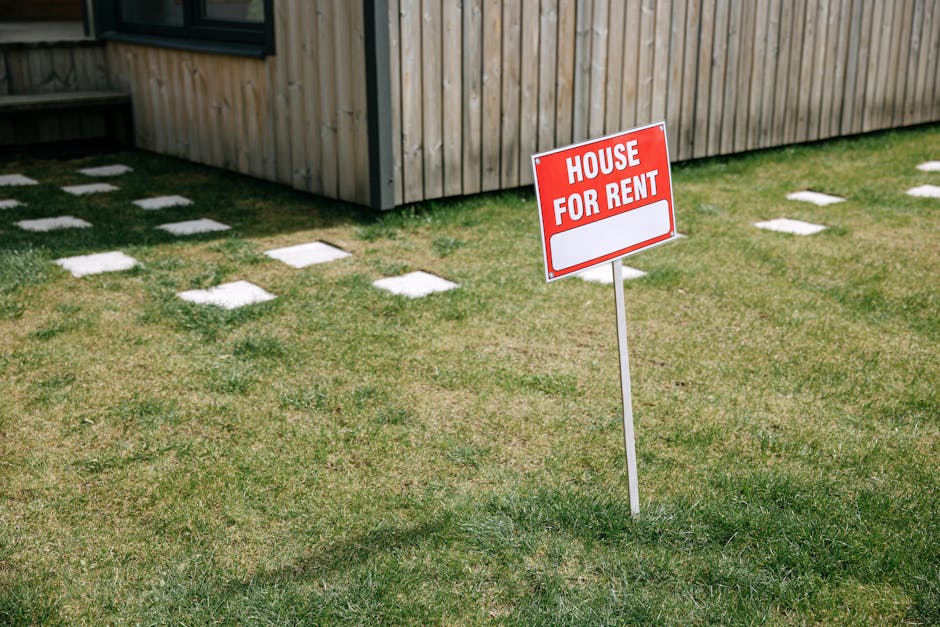
The 1% rule — monthly rent should equal 1% of purchase price — was the mainstay of rental property analysis for two decades. It stopped working when mortgage rates doubled from 3% to 7%. A $200K property renting for $2,000/month cash-flowed positively at 3% interest. At 7% interest, the same property loses $400/month. The 1% rule wasn't wrong; it was calibrated for a different interest rate environment.
What replaces it? The reality is that rental property cash flow depends on the spread between cap rate and cost of capital. Before, this spread was generous at 3% mortgage rates. Now, with rates near 7%, properties need cap rates above 8-9% to generate meaningful positive cash flow after reserves. Markets that allow this are smaller and more specific than they used to be.
The Math of Cash Flow
A rental property generates:
- Rental income (gross monthly rent × 12, adjusted for vacancy)
- Minus: mortgage P&I, property tax, insurance, maintenance, management, vacancy reserve
- Equals: annual cash flow
The standard operating expense rule: non-mortgage expenses run about 45-50% of gross rent for most properties. That leaves 50-55% of gross rent for debt service and cash flow.
If monthly rent is $2,000:
- Available for mortgage + cash flow: ~$1,050
- At 7% on $180K loan (20% down on $225K): mortgage = $1,197
- Cash flow: -$147/month
The property loses money monthly despite "hitting the 1% rule" ($2,000 rent on $200K property).
The New Rule of Thumb
For positive cash flow in the current rate environment, look for:
- Rent to purchase price ratio: 1.3-1.5%
- Cap rate (NOI / purchase price): 8-10%+
- Cash-on-cash return: 8%+ on invested capital
These thresholds are tighter than historical norms. Most coastal and tech-heavy metros simply don't offer properties that meet them. Which is why investors are increasingly looking at Midwestern and Southern small-to-mid-cap markets.
Markets That Still Work
As of late 2025, cap rates of 8%+ with solid tenant base are available in:
- Cleveland, Ohio: duplexes and SFRs at 9-11% cap rates in C+/B- neighborhoods
- Memphis, Tennessee: similar profile to Cleveland
- Birmingham, Alabama: strong working-class rental demand
- Little Rock, Arkansas: emerging market with reasonable numbers
- Pittsburgh, Pennsylvania: steady appreciation + good cap rates
- Kansas City, Missouri: balanced market, growing
- Detroit (selected neighborhoods): extreme cap rates but operational complexity
Markets that almost never cash-flow now:
- San Francisco Bay Area
- Los Angeles, San Diego
- Seattle, Portland
- Denver
- New York, Boston, DC
- Most of Florida (overheated)
- Phoenix, Las Vegas (post-bubble)
The Cap Rate Detail
Cap rate = Net Operating Income / Purchase Price.
NOI = gross rent - all operating expenses (but not mortgage interest or depreciation).
Example: $200K property, $2,000/month rent = $24,000 gross. Operating expenses 45% = $10,800. NOI = $13,200. Cap rate = $13,200 / $200,000 = 6.6%.
A 6.6% cap rate property financed at 7% interest loses money (borrowing cost exceeds operating return). A 9% cap rate property at 7% interest has 2% positive "spread," which provides cash flow margin.
Property Tax Varies Wildly
Property taxes are a major component of "operating expenses" that varies by 10x across the US:
- Hawaii: effective rate ~0.3%
- Alabama: ~0.4%
- Colorado, Arizona: ~0.5-0.6%
- California: ~0.7% (but capped at Prop 13)
- Texas: ~1.7%
- Illinois: ~2.1%
- New Jersey: ~2.3%
- New Hampshire: ~1.9%
A $200K property in Alabama pays $800/year. In New Jersey, $4,600/year. This is a $3,800 annual cash flow difference on identical properties. For analysis, always verify actual property tax for the specific parcel — not regional averages.
The Operating Expense Reality
The 45-50% operating expense assumption breaks down across specific properties. Run your own numbers:
- Property tax: varies by location
- Insurance: 0.3-0.6% of property value annually for investor policies
- Maintenance: $50-$250 per month per unit (older = higher)
- Capital expenditures reserve: $100-$200 per month (roof, HVAC, water heater, etc.)
- Vacancy reserve: 5-10% of gross rent
- Management fee: 8-12% if you use a property manager
- Tenant turnover costs: $500-$1,500 per turnover
- Legal/accounting: $200-$500 per year per property
On a fully-modeled basis, operating expenses often exceed 55-60% for older properties in B/C neighborhoods. The "45% rule" is a shortcut that often underestimates real costs.
The Cash-on-Cash Return
The most useful return metric for rental properties: cash-on-cash return = annual cash flow / cash invested.
Example: $200K property, 20% down = $40K cash invested (plus $5K closing costs = $45K total). Annual cash flow after all expenses including mortgage: $3,000. Cash-on-cash = $3,000 / $45,000 = 6.7%.
Minimum acceptable cash-on-cash for rental property in 2026: 6-8%. Below that, you're not being compensated for the operational headaches.
Top-tier deals produce 12-20% cash-on-cash (often small-to-mid-cap markets, good property management, minor value-add opportunities).
The Appreciation Component
Cash flow isn't the only return. Appreciation and principal paydown add to total return:
- Cash flow: 6-8% of invested capital
- Principal paydown: 2-4% of invested capital (increases over time)
- Appreciation: 3-5% of property value = 15-25% of invested capital (at 20% down)
- Tax benefits (depreciation): 1-2% equivalent after-tax
Total return on a properly-selected rental: 25-40% annually of invested capital in normal years. Leveraged returns amplify both up and down.
The Interest Rate Scenario Planning
Current mortgage rates around 7% make cash flow hard. But interest rates cycle. In 5-10 years, rates could be back to 4-5%. Properties bought today at 7% and refinanced later at 5% would have dramatically better cash flow.
The strategy: buy properties that break even or slightly negative at current rates, with the assumption that refinancing opportunity will materialize. This requires sufficient reserves to carry properties during the negative cash flow period.
Risk: rates go higher or stay elevated. If 7% rates persist, negative cash flow compounds. This isn't speculation-free.
The Value-Add Strategy
Instead of buying cash-flowing properties at retail, buy underperforming properties and increase their value:
- Below-market rents you can raise after lease turnover
- Deferred maintenance you can address and charge more rent
- Conversion opportunities (SFR to duplex, adding ADU)
- Management inefficiencies to fix
Done well, value-add strategies can turn 5% cap rate properties into 8% cap rate properties over 2-3 years. The appreciation from the operational improvement is separate from market appreciation.
This requires knowledge and operational capability most W-2 investors don't have. It's closer to a business than a passive investment.
The Tax Benefits (Still Real)
Rental property tax benefits remain substantial:
- Depreciation: $7K-$10K per year tax deduction on $200K-$300K property
- Interest deduction: mortgage interest fully deductible
- Expense deductions: insurance, property tax, repairs, management, travel
- Cost segregation: accelerated depreciation on portions of the property (HVAC, fixtures)
For high earners who qualify as real estate professionals (mostly not W-2 workers), losses can offset active income. For W-2 workers, losses offset rental income and carry forward.
The Operational Commitment
Rental properties aren't passive investments. Even with a property manager at 8-10% of gross rent, expect:
- 5-10 hours per year per property for oversight
- Monthly reconciliation of statements
- Annual tax filings (Schedule E)
- Tenant escalations and major decisions
- Periodic renovation/upgrade decisions
Self-managed (no property manager) properties consume 3-5x more time. For someone already working full-time, this becomes difficult to sustain past 2-3 properties.
The Stop-Loss Point
Unlike stock investing, rental property losses can exceed your invested capital. Leverage amplifies downside. If property value drops 30% and mortgage is 80% of original value, your equity is wiped out and more.
Stop losses for rental investing:
- Sell if cash flow is persistently negative with no path to improvement
- Sell if market fundamentals shift permanently (major employer leaves, rent controls enacted)
- Sell if management becomes untenable (health, time, family situation)
Holding underperforming properties out of stubbornness or "this will turn around" is how investors go from wealthy to bankrupt.
The Summary Framework
For rental property to make sense in 2026:
- Market with cap rate > 8% for typical properties
- Property with 1.2%+ rent-to-purchase ratio
- Positive cash flow after all realistic expenses and reserves
- Quality tenant base (stable employment, local demand)
- Exit strategy within 5-10 years if market shifts
If any of these are missing, the math usually doesn't work. Don't buy the property.
For most professionals, REITs (VNQ) provide real estate exposure without the operational burden. Direct rentals are a business, not an investment. Choose carefully.